Between Helplessness and Hope

Updated: Sep 7, 2025
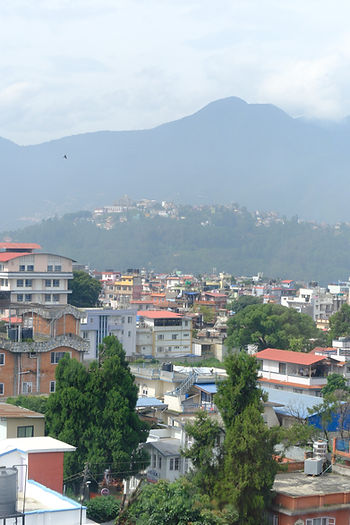
During the weeks leading up to this trip, I was consistently warned about culture shock. This is something I was quite afraid of, mostly since it did nothing but add to my anxiety. Now, being here less than 24 hours, I figure I am not feeling the culture shock but a loss in translation and, in effect, the feeling of helplessness. Not only this, but the feeling the staff and the children all seemed to have towards me—the feeling that I was an uncomfortable circumstance. That was the very first impression with most of the older children and staff. The younger children seemed to take a liking from afar, so it seemed, and I felt a lot of my uneasiness was my own fault for believing it was merely under 10 I'd be helping (even though I was specifically told it was all ages). I believe closer to the end my jetlag had finally caught up to me after a day of running and therefore I was not feeling rational nor emoting properly. So I write this now to remind myself of the earlier portion of the day.
After leaving the hotel we'd stayed in for the diminished night, we traveled over to the SDSS—the program center I shall be working at—and found Bijata quite giddy that we were there, and we conversed for a long time as though I were a part of her and my travel friend's group. There I met some wonderful, helpful people. One lady in particular meandered down the halls offering tea and the brightest of smiles. She wore the prettiest blue, which complemented her eyes, and laughed at my confusion and indecision, which are indeed entertaining. After this reunion, Bijata, Kathryn (my travel friend and emotional support throughout this black hole of change), and I headed to the home where the children and her parents were staying, which was where I was intended to stay as well. Upon entering, we stumbled upon a small, almost three-year-old child, who turned out to be Bijata's niece. She had returned merely a week prior to my visit from the hospital after a major heart surgery. She will forever host the scar that proves people believe her life is worth everything on her back. We also ran into a couple of the boys who lived there, one, whose long, muttered name escapes me, who'd returned from the hospital to get his one out of two weekly dialysis sessions after receiving an infection during his school time, which promptly led to kidney failure. His friend stayed with him to support him throughout everything, and he was brave enough to flaunt the tubes taped onto him like he was a 4-year-old's arts and crafts project where they conduct the dialysis. He sat in a wheelchair but hardly seemed to notice it as his friend stood behind him, the conductor of the chair. His friend stared at me intently, but he had a kind and genuine smile, one that never seemed to waver as though he knew it couldn't and has never thought twice about it. I regret to say I was thinking over my smile, in the hopes it reflected his. I'd later been given a tour of my room, large and nostalgic, the same color walls as my childhood room stared back at me upon entering. I was sharing a floor with three boys who shared a room and are all three visually impaired. I entered a small bathroom with tiled floors, a broken toilet (you need to reach in to flush, they have no top and therefore no handle) and a sink which paralleled each other. The entire bathroom was the shower. It was missing a garbage can to throw away the toilet paper (their sewage isn't so modern, which doesn't allow them to flush toilet paper), and I got stuck in there three times with the association of my luck and their sticky door. Bijata had taken us on errands throughout the day, one of them to stop off at her new home, allowing for us to be the first guests. She designed many parts of it herself, one part specifically for her father-in-law. Nepali tradition states that when the death of a husband occurs, the wife must take care of her parents-in-law. Bijata's father-in-law, whom I have not yet met, is in a difficult time in his life as his old age is taking over. He has difficulty moving and is almost constantly moving around in a wheelchair. His bedroom is on the main floor and has a wall of windows which open and face the main living area and the kitchen, allowing him to stay connected and more involved with the lives of his family on the days he is bedridden. I think the accommodation is so pure, and it made me think of my mother, wondering how good of an idea it would be if we'd done that for her. Once we returned to the SDSS, I had become acquainted with Bijata's energetic young daughter who always seemed to put family first. She spoke with hardly an accent but such confidence with a mix of western pop culture. She is eight—hates choir, loves Taylor Swift, consistently checks her social media "presence" and is such a comfort to speak to.
Her father passed when she was four. We had a conversation about grief. It upsets both of us when we cannot compare a recent memory with our parent since ours have passed on. She said it made her mad. I told her I felt the same. I told her I understood more than most she's met. I told her she could speak to me if she ever needed anybody. It was all true.
At the return to my and the children's apartment building, they had all returned from school and were hanging about, staring at me with kind smiles, much like the child from before. I went over to watch an outdoor partner game three kids and Bijata's father were playing. It seemed to be a cross between the flicking game Crokinole and checkers. The kids won and sent their victorious smiles in my direction when I applauded them. I was later introduced to each one (I cannot remember a single name; they are all lovely, but all so long and phonetically spelled. This frightens me a touch) and I introduced myself back. They seemed skeptical, but perhaps that was because Bijata was in there—you know, the boss, be on your best behavior type deal, but she is the kindest human being, I do not see that being the issue. It was more than likely me. Someone was later sent to fetch me from my room for supper. She was the kindest and, believably, most fluent in English, even for being at an eighth-grade level. She called me sister, called her friends sister, they all called the older women auntie, and I realized that these children were all strangers to one another once upon a time and are now a tight-knit found family based around their traumas and who that's made them into. And I am a part of it. My inviter was kind, asking me questions, getting me water, trying to befriend me and translating all of my answers to her sister/friend on the other side of me who was curious but less fluent. The food was home-cooked and they feared it for me so cooked me an egg as a "just in case." They just met me, but knew me well. My dinner was rice and egg. I was offered a Roti, a flat disc of dough (which Bijata's mother sat on the outside step kneading) cooked in an oiled skillet. I felt insanely nervous being full for I knew nothing (and still don't) of the culture, if food waste was a big deal, if you needed to finish everything. My anxiety arose when I realized my English sister left and I had no clue how to tell them I had finished and how to ask them what I was to do afterward. This is where the helpless feeling came into play. This is the blog's beginning. I was advised to download Google Translate and so I did and I wrote out what I was trying to say. They all hovered around my phone expectantly and soon could not figure out what it was saying and that was when I realized Google Translate is one of the most useless tools out there. Great for cheating on French papers, awful when trying to communicate to someone whose first language is different from your own.
So, as I sit here to the lullaby of the low hum of cars and the dogs howling, I hope you understand my message. There are a lot of brave soldiers here, a lot of survivors, a lot of personality, a lot of hope, a lot of childlike wonder and smiles. There's knowledge and wisdom and curiosity and life. I've come to recognize that novelty is terrifying and surreal, but also so, so good for me. This trip shall teach me a million things and I look forward to that and do hope my words help you follow suit on your own adventures and re-ponder your life.
Until tomorrow!

The west of Bolivia is in the mountains, like Nepal. While I've never been to Nepal it seems the countries share similar geography, amoung other things. I remember landing at the airport in El Alto in the wee hours of the morning - the only time planes land and take-off due to cooler/calmer air at such high altitudes. I wonder if the air there is as thin as the air I remember; soroche, the name Andeans use for altitude sickness.
I had arranged with the university to complete my final semester of teaching there. Not in El Alto but in Santa Cruz, a city in the tropical lowlands. I would have liked to have taught at a more rural o…